
Termite Baiting & Monitoring Bendigo
Baiting turns termite biology against the colony: the workers carry the bait home, and the colony collapses at the source. No drilling, no soil treatment — ideal where chemical barriers aren’t practical.
Four stages to a collapsed colony
Baiting doesn’t try to keep termites out. It lets them find the stations, then uses their own foraging behaviour to carry the bait back into the nest.
Discreet in-ground stations placed around the perimeter, sitting flush with the ground — they intercept foraging termites before the house.
A Field Biologist monitors the stations on schedule, identifying the species, the pressure and the direction it’s coming from.
When termites are found, bait goes in. Workers feed and carry it back to the nest, spreading it through the colony.
The colony declines and collapses at the source — then monitoring continues, because Central Victoria always has another colony.
What a baiting program looks like
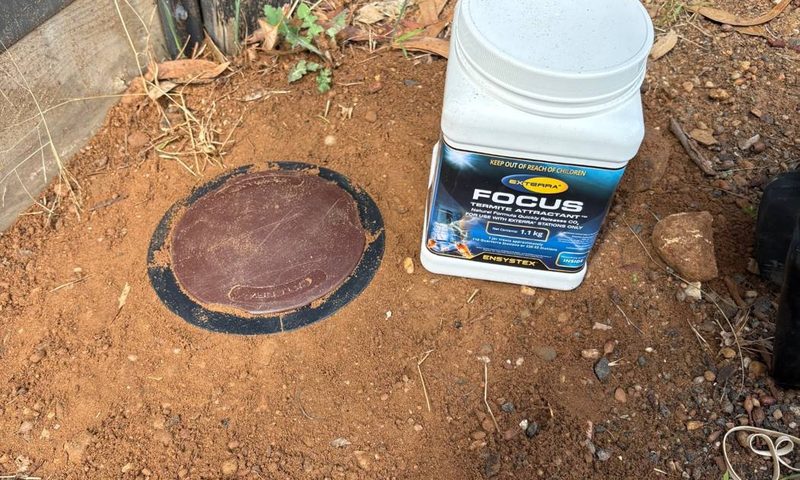
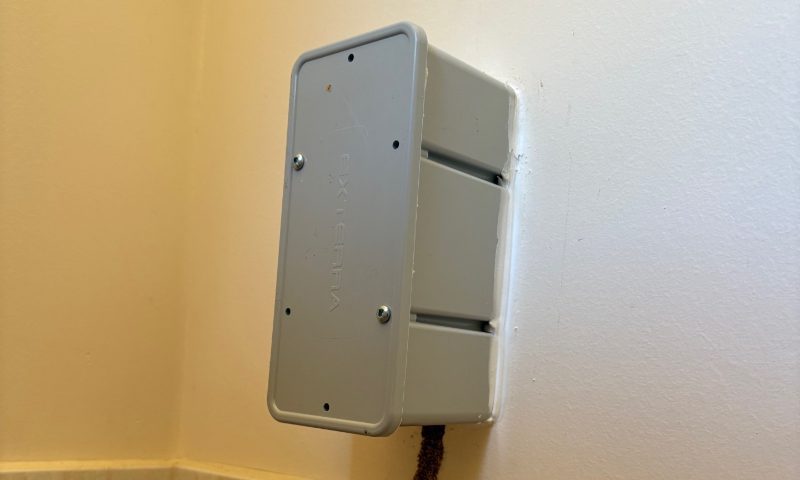
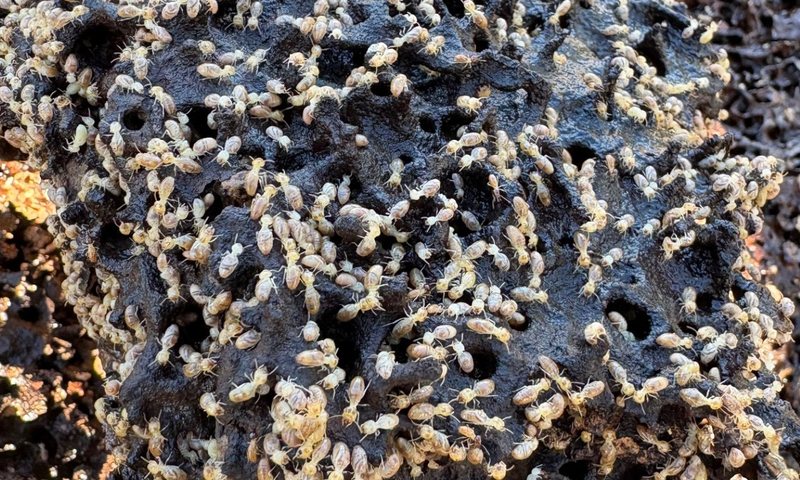
Strong protection, minimal footprint
Baiting suits homes where drilling or full soil treatment is impractical — and homeowners who want ongoing, monitored protection rather than a one-off application.
Stations install with minimal impact; above-ground boxes treat active termites without structural work.
Every check reads species, pressure and direction — intelligence a static barrier can’t give you.
Above-ground bait deals with live activity while the in-ground network guards the perimeter.
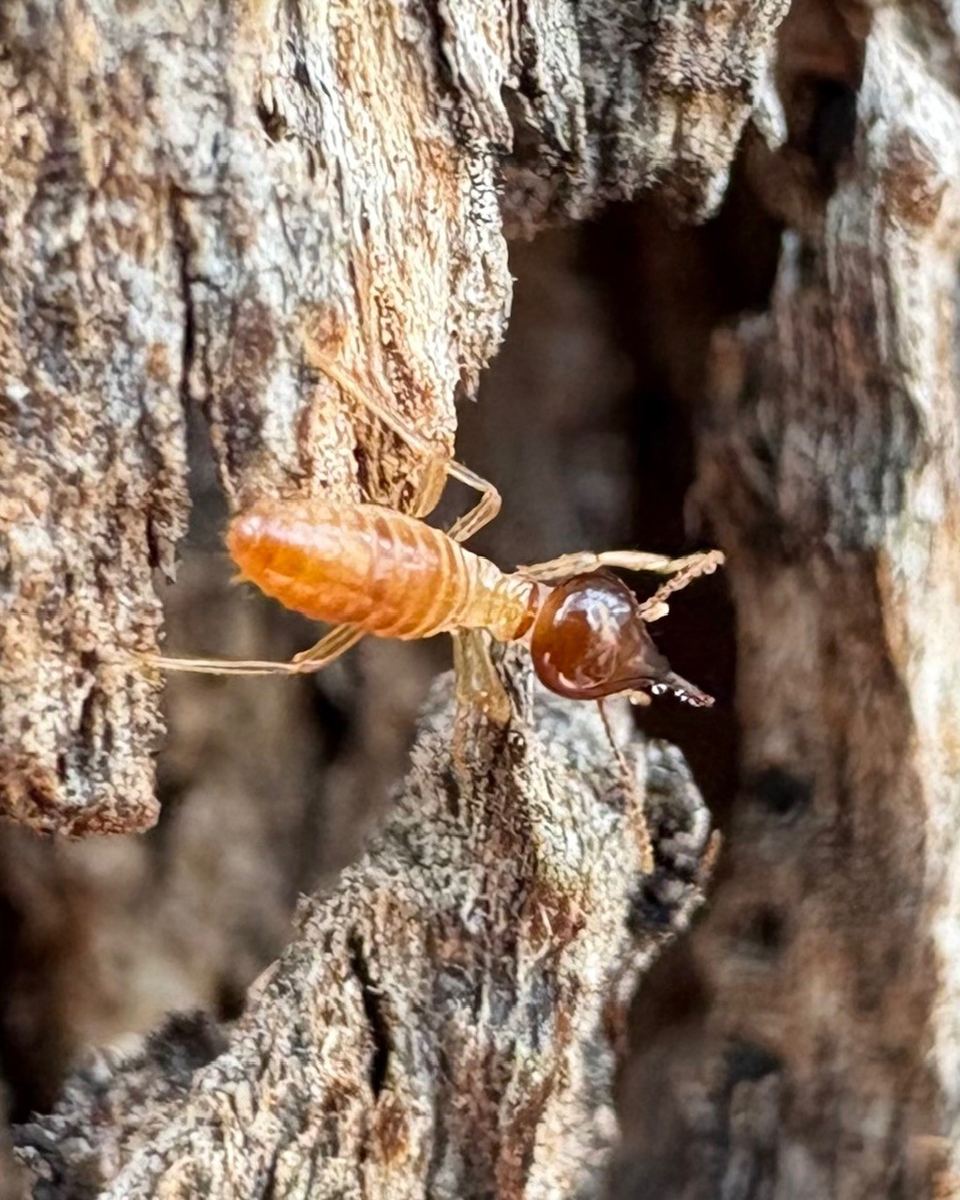
Termites or white ants? Same insect — ‘white ants’ is just the common Australian name.
Termite baiting FAQs
How long does colony elimination take?+
It varies with colony size, species and season — the bait has to work its way through the nest. Joel will set expectations for your situation honestly.
Baiting or a chemical barrier — which is better?+
Neither is ‘better’ universally. Barriers give a continuous treated zone; baiting gives monitored, low-disruption protection. Soil, construction and the species present decide it.
Can baiting and a barrier be used together?+
Yes — on higher-risk sites the two complement each other, with the barrier holding the perimeter and stations giving early warning of pressure nearby.
How often are stations checked?+
On a set monitoring schedule, stepped up when activity is found. You’ll always know what was seen and what happens next.
Is it safe for kids and pets?+
Yes — bait sits inside locked stations, and the actives used are targeted at termites, applied to label by a licensed technician.
Do I still need inspections while baiting?+
Yes. Station monitoring watches the perimeter; a full AS 3660.2 termite inspection checks the building itself for anything that found another way in.
What does a baiting program cost?+
It depends on the perimeter, the number of stations and the monitoring involved. Call 0467 857 177 and Joel will talk you through a quote.
Servicing: Bendigo CBD, Kangaroo Flat, Strathdale, Epsom, Eaglehawk, White Hills, Golden Square, Kennington, Flora Hill, Huntly, Maiden Gully, Strathfieldsaye, Heathcote, Castlemaine, Kyneton, Daylesford, the Macedon Ranges and 80+ more areas →
The full termite service
Annual AS 3660.2 inspections that catch activity early.
Learn more → Chemical BarriersThe continuous-zone alternative to baiting.
Learn more → Termite TreatmentActive infestation? Treatment options compared.
Learn more → Termite Control BendigoThe complete guide to termite management.
Learn more →Protect your home with baiting.
Ask about a baiting and monitoring program for your property — what’s involved, and a written quote.